Do you wonder how to organise user manuals, warranties and receipts that come with new purchases so you can find them when you need them – whether you need it to know how to operate the item, get it fixed without incurring the repair cost or for the hand-over of your home to your landlord?
Like for any other type of paper, the answer lies in having a robust process. But don’t let the idea of setting a process put you off as I’ve got it all work out for you below. I promise it’s simple!
This is how to organise user manuals and other papers coming with a new purchase
Boxes
First of all, I highly recommend you keep the box together with the user manual, warranty and receipt until you’re sure you won’t return your purchase. Give yourself up to a week to make sure the item is working properly and meeting your expectations.
Once you’re sure you’ll be keeping the item, get rid of the box as they can be a source of clutter. You can make some exceptions for fragile items of awkward shape or items whose value would increase if they were sold in their original box. Keep those boxes out of the way, in a store room or on the upper shelves of a bedroom for example.
User manuals
Ask yourself whether you really need to keep the user manual to know how to operate the item. The reality is that there are plenty of user manuals that we never ever consult.
If you need to keep it, check whether the user manual is available online. If it is, download it and keep it in a folder dedicated to user manuals. Discard the hard copy.
If it isn’t available online, keep only the pages in your own language and discard the rest. It will drastically reduce the volume of paper you’re keeping.
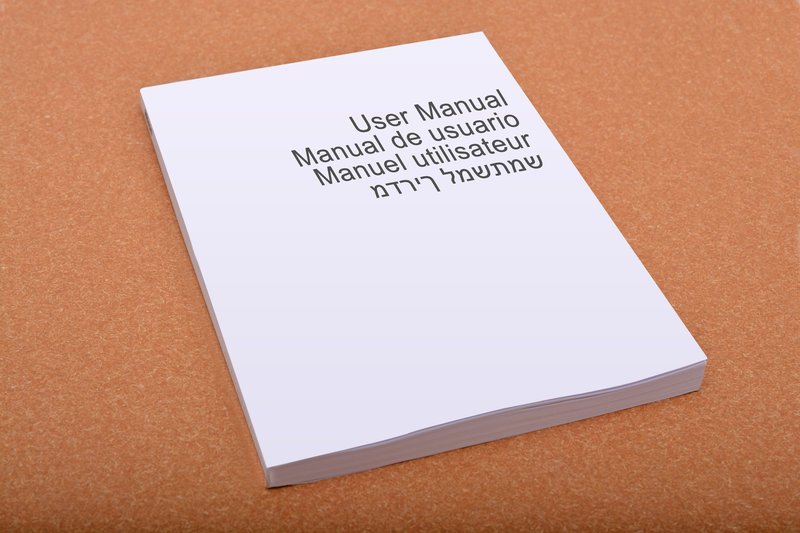
File your user manuals by category e.g. household appliances, children’s items, personal items, electrical items, furniture, sports items, cars etc. if it makes sense to you. I personally don’t categorise them as we don’t keep many.
If you rent your home, you may want to keep the user manuals of the items that belong to your landlord separately so it will make it easier to hand them over when you move out. In this case, please retain the whole manual, not only the pages in the language of your choice.
Make sure to be consistent in the way you categorise your user manuals across various formats – paper and digital – so it will be easier to find them when you need them.
Take the habit of discarding the user manual when you get rid of the item so the file stays current with only items you own.
Warranties
Some manufacturers ask you to register the warranty online. I must confess that I only do it for expensive items.
Staple together your receipt to the warranty. You may want to photocopy your credit card receipt as the ink fades away very quickly. Add the date until which the item is under warranty. For example, if you bought the item on March 1st, 2019 and the item has a one-year warranty, write down February 29th, 2020 on the receipt and/or warranty.
File the warranty together with the receipt. Use the same categories that you’ve defined for the user manuals. You may also decide to file the warranty together with the user manual.
I file our warranties by expiry date with the closest expiry date at the top. Every time I add a warranty to the file, it’s easy to see the ones that are no longer valid so I don’t have to schedule a specific time to purge this file.
Receipts for big-ticket items
You may also want to keep the receipt for big-ticket items even if the purchase doesn’t come with a user manual or warranty, in particular for insurance purposes, or in case you want to resell the item at some stage. Set an amount above which you’ll be keeping the receipt.
Again be consistent and keep the same categories as those you used for your user manuals and warranties so you don’t multiply the number of categories to remember.
As for those papers you already have in your home…
Gather all user manuals, warranties and receipts you own in one single location. Go through the pile and ask yourself whether you still own the item. Let go of all the paper related to items you no longer own or are not sure you own.
In terms of filing systems
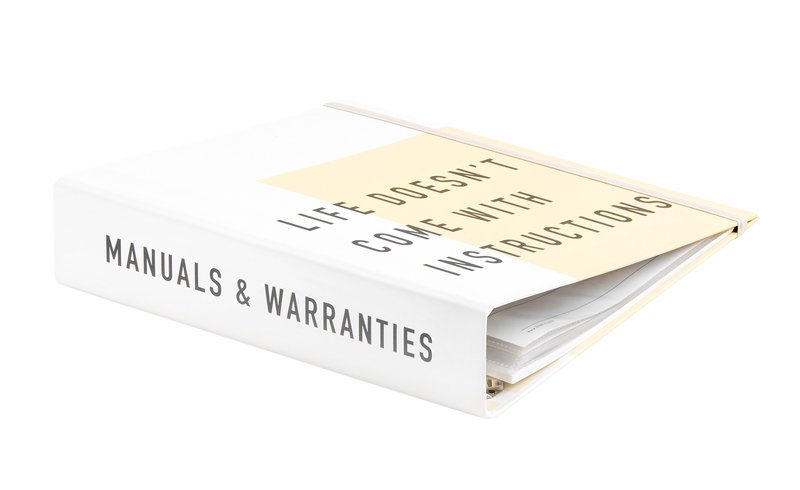
Many people like to keep their user manuals and warranties in binders, like this pretty version from kikki.K.
I personally file our paper in a clear L-shaped plastic holder (as user manuals and warranties hardly come in an A4 size) that I insert into a Manila folder, itself stored in a magazine holder.
And that’s it! I promised it would be easy. It is, right? The most difficult part might be to locate all the user manuals, warranties and receipts you own as the chance is that they are scattered all around your home.
Contact me if you still struggle to tame your paper clutter, whether it’s the household paper or your children’s school or artwork. Together we’ll develop a plan based on your situation so you can regain control over your paper and maybe even stop the arguments with your spouse about it.

Leave a Reply