Do you ever feel like your day has disappeared before you’ve even had a chance to start? When life’s daily demands feel heavy, it’s easy to get stuck in a cycle of “decision paralysis.” In this post, I’m sharing the time-saving habits I use as a professional organiser to stay calm and focused. This isn’t about finding ways to do more work; it’s about creating systems that do the heavy lifting for you so that you can move through your day with more ease and less mental exhaustion.

Practical Time-Saving Habits To Reduce Daily Overwhelm
Outsourcing Your Memory To Paper And Digital Tools
Writing things down
Although I do have a rather good memory, I write all my meetings, appointments, and tasks down so as not to clutter my brain with information that I know would prevent me from falling asleep at night or make me miss an important commitment and end up wasting everyone’s time. Plus, instead of wasting time thinking about what I need to do, I just do it.
Related: How to write a to-do list that gets done
Consolidating all meetings, appointments, tasks, and activities into ONE place
I use Outlook as my diary and to-do list. Having all my professional and personal commitments, including commitments to myself, consolidated in one place allows me to see at one glance whether my workload is manageable, and if not, make quick decisions about how to streamline it.
Related: Paper Planner Or Digital Planner – Which One Is Right For You?
Ending A Task By Taking Stock Of What Is Left To Do
It allows me to easily resume my work wherever I left it the previous time I was working on it, instead of putting my memory to the test and thinking about what I need to do.
Using Batching To Protect Mental Energy
I group tasks of a similar nature together and allocate a timeslot in my schedule to deal with them. For example, on the personal front, I have one hour every Saturday morning allocated to my “personal to-dos” when I plan my meals, order food online, go through school communication, capture my expenses, schedule appointments, etc. I also have 30 minutes on the first Saturday of the month allocated to my “monthly accounting” when I download all my bank and credit card statements and reconcile them with my expenses. This is probably one of my favourite time-saving habits.

Planning Ahead
Planning The Next Day The Night Before
I always end my day by checking what the next day is supposed to be made of. It allows me to calmly decide whether I need to cancel or reschedule some tasks, have an idea of what outfit I should wear, whether I need to pack my computer. It allows me to start and go through my days in a more efficient and relaxed manner.

Planning Meals For The Week Ahead
Obviously, meal planning takes a bit of time – although over the years I’ve developed an 8-week rolling meal plan that can take me as little as 2 minutes to open and print if I don’t need to make any changes to it. I also need to spend some time taking stock of the contents of my fridge and pantry to write my grocery list. But on the flip side, I limit the number of trips to the supermarket and reduce my shopping time. I put a meal on the table in less time because I don’t have to decide at the last minute what to cook and have all the ingredients on hand. That’s another of my favourite time-saving habits.
Related: 4 benefits of meal planning that will encourage you to get started
Having A Dedicated Home For Every Important Activity
I don’t go through my days and weeks randomly, no, I have dedicated timeslots in my schedule for all those activities that are important to me, whether driven by a professional target or a personal aspiration. Again, instead of spending time deciding what I need to do, I just do it. Over the years, I’ve learned to identify when I’m at my peak energy level and the things that make me waste time so that I can be strategic in the way I build my schedule and be as efficient as possible. Even people who think it’s impossible to put predictability into their schedule or worry that it’s too constricting end up being won over by such a system.
Related: Why adopt a routine schedule
Cultivating Consistency
As an example, I use the same filing structure and naming convention across various formats, i.e. paper, digital, or email, so that even if I can’t remember in which format I’ve filed a document, it doesn’t take me long to go through the various formats and find it. Another example? I have a work uniform and typically wear capri pants and a polo shirt (I have 4 of each that I can mix and match together) when I visit a client, and a dress for networking events. Call me boring if you wish, but being consistent not only saves me time but also frees a lot of my brain for more important decisions.
Creating A Clutter-Free Environment
Immediately Putting Aside Things That Have Outlived Their Purpose
I’ve learned over the years to trust my decisions, so when I come across something that I no longer use, need, or love, I put it immediately aside so it doesn’t distract me when I’m looking for the things I really need. I have a dedicated shelf in the cupboards of my study room dedicated to our castaways. When the shelf is full, I take necessary action, whether it’s giving away, donating, recycling, or selling. As a result, I never really need to plan a decluttering overhaul in my home.
Related: Disposal options: What to do with your stuff in Singapore once you’ve decluttered
Giving a Home To Every Item
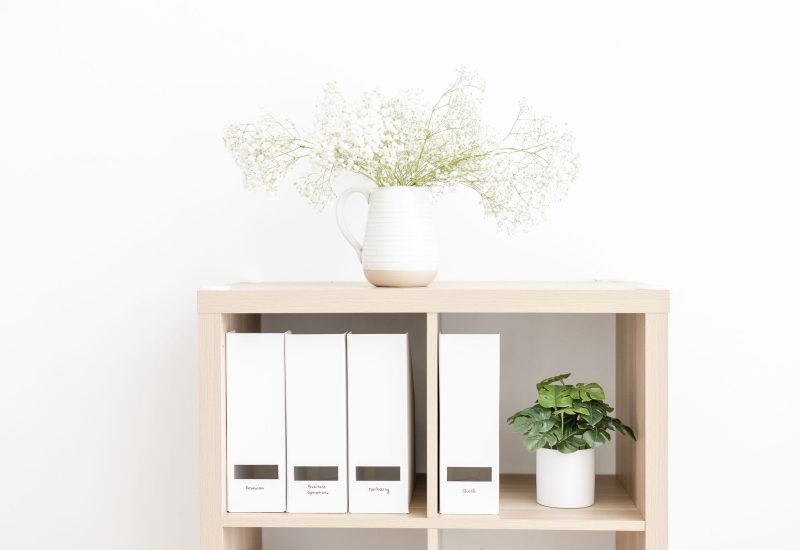
This is the only way to quickly find what you need when you need it. For example, I have a decorative bowl on the bookshelves in my study room where I always put my keys, glasses case, sunglasses, earphones, and any other items I typically take with me when I leave my home. I’ll add anything specific I need for the next day, e.g. my parent’s pass for when I visit my son’s school, a form I need to bring to the post office, etc. Even if I pack my bag at the last minute, everything I need for that day will be in one place, and I won’t have to go frantically around my home to gather what I need.
Completing Tasks
I return things where they belong immediately after I’ve used them. It doesn’t take me long because, as mentioned above, every item I own has a dedicated home. And when I buy something new, I get rid of the carrier bag, remove the tag, and find it a home as soon as I come back home. By adding just a few seconds or minutes to a task that I’ve already started, I won’t have to go back to it to finish it, with the risk of procrastinating in the meantime.
Ending The Day By Tying Up Loose Ends
If, for any reason, I haven’t been able to complete a task right away, I spend 5 minutes before going to bed putting things in their proper place. Investing in those 5 minutes allows me to start the next day afresh instead of being distracted by the “chaos” around me, and makes me more inclined to keep my home tidy in the long run.

Protecting Time with Boundaries
Switching Off All Digital Notifications
Like most people, I feel compelled to check my phone and emails as soon as I see or hear a notification. Studies show that every time you interrupt what you are doing, your brain needs about 25 minutes to return to your original task. So, I’ve turned off all the notifications from my emails and apps so that I can stay focused on the task at hand. Most people in my network know that they’ll have to call me if they need to reach me urgently. This time-saving habit is crucial for my productivity.
Related: How to break digital addiction
Making NO Part Of Our Vocabulary
I like to make people happy, and it took me a while to realise that when I was saying YES to someone or something, I was implicitly saying NO to someone else or something else. At the end of the day, time is finite, so we have to make decisions on how we want to use it. And remember, it’s easier to take back a NO than a YES.
Related: Why And How You Should Start Saying No
Taking Your First Step Toward Better Habits
Building these time-saving habits isn’t about achieving perfection or “fixing” who you are; it’s about being kind to your future self. By creating small systems that do the heavy lifting, you can quieten the noise of daily demands and focus on what truly matters to you.
I’ve spent years refining these steps, and the secret is simply to start small. But remember, you don’t have to start from zero. I’m sure you already have plenty of good habits, whether you’re conscious of them or not. Give it some thought. What are you already doing that works for you?
I’d love to read in the comments below what your own time-saving habits are, or which one from this list you’re excited to try first.
If you find that the “knowing” is easy but the “doing” feels impossible right now, please know that support is available. I work with women to bridge that gap through my Life Management Coaching, helping you create a life that feels manageable, predictable, and much more joyful.
Frequently Asked Questions
There isn’t one “perfect” place to start. I suggest choosing the habit that addresses your biggest frustration or the one that feels the easiest to implement first. A great technique is “habit stacking” – attaching a new habit to something you already do automatically, like checking your diary while your morning coffee brews.
It generally takes about a month of consistent practice for a new habit to feel like second nature. To avoid feeling overwhelmed, please try to focus on just one habit at a time. It’s much better to master one small thing than to struggle with five and risk giving up.
Planning your day the night before, including choosing your outfit and packing your bag, is a total game-changer. It removes that frantic “last-minute scramble” that often leads to delays and decision fatigue in the morning. For more specific strategies on improving punctuality, do check out my post on how to stop running late.

Leave a Reply