Since I started working as a professional organiser in 2013, I have seen clutter in various shapes and sizes, and what type of clutterer a person is.
I have heard countless stories about how the clutter had formed and the struggles to let go of it. I have seen the toll the clutter was taking on my clients and their families. And I have witnessed the range of feelings and emotions associated with it.
While a cluttered home or workspace, busy schedule, or endless to-do list contribute to worsening our mental well-being, they are also the expression of what’s going on at a deeper level inside us in the first place.
And that’s something I love about my job: helping my clients become aware of the underlying factors behind the clutter and empowering them to act upon them. Don’t get me wrong, I’m not a psychologist or a counsellor, and I certainly don’t provide therapy. I just help them face their stuff and the discomfort they might have tried to avoid for many years. Because unless you do, the clutter will inevitably come back at some point. The journey is not easy and it will take time. But living a clutter-less if not clutter-free and happier life is possible.
While working as a professional organiser for the last 10 years, I have identified various clutterer personality types.
Here are the 5 most common ones I typically work with.
The Sentimentalist
The sentimentalist experiences strong emotions towards his/her stuff, especially sadness and guilt. They feel they need to keep a whole category of items to:
- preserve the memory of a loved one (their late parents or their past partner)
- show loyalty to a person (who gave them something)
- reminisce about a time they miss (their work life or social life pre-children) or have missed (not being as present as they would have liked when the children were growing up), especially when their present is proving challenging.
Items a sentimentalist clutterer typically holds onto include…
- The stuff their children have outgrown – the clothes, the toys, the artwork, the schoolwork, the books, the board games, etc.,
- The clothes that no longer support their lifestyle since they became a parent but that are a reminder of their past work or social life,
- The knicks knacks collected during their travels,
- The greeting cards they’ve received over the years,
- The heirlooms they’ve inherited from a loved one,
- The unwanted presents or hand-me-downs that they don’t necessarily like or have use for but that they feel obligated to keep as they feel they would betray the person who passed them onto them otherwise.
If you are a sentimentalist clutterer
Set boundaries and be intentional about what and how much you keep, and how you keep it. Do some inner work to find meaning in your own life.
The Idealist
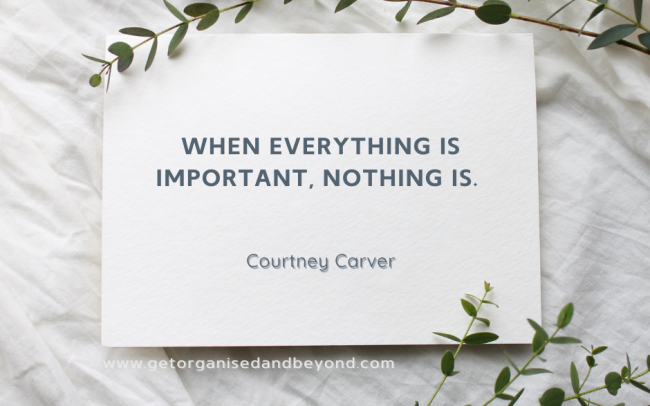
The idealist holds onto things that symbolise a version of himself/herself that no longer exists, or maybe that even never existed, or that they want to become. The idealist, caught between the past and the future, struggles to accept the present, often leading to frustration.
You might be an idealist clutterer if…
- You have a wardrobe full of clothes that don’t fit, but you keep them in hopes of losing weight,
- You’re holding onto barely used toiletries and cosmetics in your bathroom, hoping they’ll make you younger, thinner, or more attractive,
- Your kitchen cabinets are full of utensils and appliances that you’ve hardly used because you are time-poor but that you’re keeping because you wish to put healthy home-cooked meals on the table for your family as your mum did,
- Your bookshelves are full of books, some that you even didn’t read or like, hoping to become or come across as a well-read person,
- You’ve kept all the equipment and materials supporting hobbies you have no longer time for since you’ve become a parent or had to look after your elderly parents or your physical condition no longer allows you to practice.
If you are an idealist clutterer
Practice self-acceptance and embrace your imperfections/insecurities or not ideal circumstances so you can be free to live in the now a more meaningful life.
The Worrier
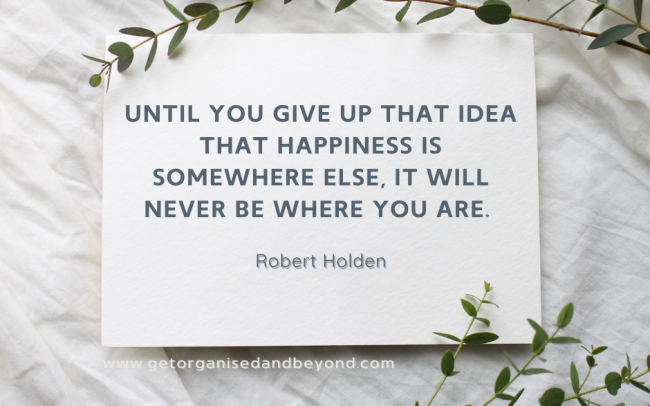
The worrier has a strong need for security and control that might be the result of past trauma such as growing up in poverty or going through a war.
You might be a worrier clutterer if…
- You’ve spent good money on something that you hardly if ever used but feel it would be wasteful to get rid of it,
- You buy things in bulk to save money or in the fear that the item might be out of stock, except you don’t necessarily have the space to properly store it so you end up forgetting about it and buying more of it,
- You have no idea which documents to keep so you keep everything in case a missing document comes and haunts you down.
If you are a worrier clutterer
Cut your losses by changing your buying patterns and measuring the financial and mental cost of keeping things you don’t use. Work with an accountant or legal advisor to have clarity on which documents you must keep.
The Perfectionist
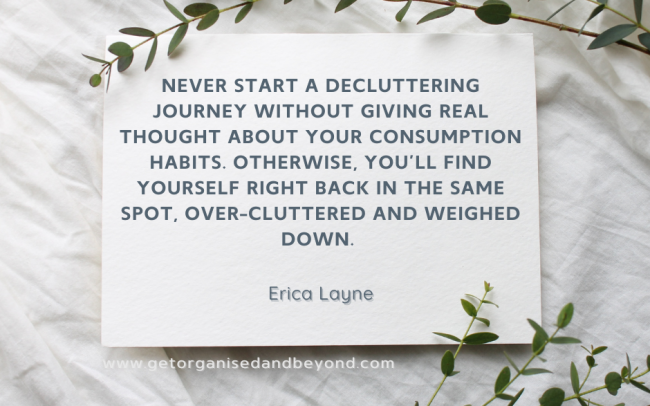
The perfectionist is someone who typically doesn’t get the job started because:
- They are waiting for the perfect time and circumstances to declutter,
- They set extremely high standards in terms of decluttering and organisation but have no clue about how to get the job done,
- They think they need to rely on fancy organising products to get organised, but either can’t afford them or buy them and don’t know how to make the best use of them,
- They want to find the best solution to dispose of their items – they want to give away the item to their sister who lives on the other side of the world and whom they haven’t seen since covid hit, they don’t want the item to end up in the landfill etc.
If you are a perfectionist clutterer
Strive for the good-enough instead of perfection. Start where you are and do the best you can. Be kind to yourself when you make mistakes and learn from them. After all, decluttering and getting organised is not a one-time event but a process.

The Disorganised
You might be a disorganised clutterer if…
- Your stuff is stored randomly without any logic,
- You don’t put away your stuff after using it because you don’t know where it should go, or because it’s too troublesome to do so,
- You fear that by putting things away, you’ll forget about the stuff and what you have to do such as the bills to be paid, the stuff to be fixed, the books to be returned to the library, the ongoing projects, etc. – unfortunately, the stuff that’s supposed to serve as a memory trigger becomes part of the landscape over time and you no longer see it,
- You struggle to find your things when you need them, or you don’t remember you have them, so you often end up buying multiples of the same item.
Being a disorganised clutterer might be the result of:
- A lack of organising systems e.g., the stuff not having a dedicated home,
- Too complex organising systems not designed with the user in mind and impossible for him/her to sustain,
- A significant life transition such as getting married or divorced, having a baby, moving, going through a career change, dealing with a physical illness, etc., that has put a strain on your organising systems,
- Brain-based challenges such as ADHD, anxiety, depression, PTSD, TBI, and more.
If you are a disorganised clutterer
Learn organising skills and, if you suffer from a brain-based challenge, executive functioning skills.
Photo by Oksana Berko on Unsplash
There was a time in my life when I had much more in my home than I have today, not because I was disorganised, but because I was a sentimentalist, idealist, worrier, and perfectionist, depending on the category of items I was dealing with. Slowly I have been able to rewrite my narrative and let go.
I hope this blog post will help you rewrite your own narrative. But if you struggle and need help to build tolerance to the discomfort of dealing with your stuff, you know where to find me. I will help you build your confidence in the decisions you have to make and learn the skills that will allow you to create and maintain a lived-in but organised home. Learn more.

Leave a Reply