Do you ever walk into a room and feel an immediate, heavy sense of exhaustion? You want to clear the space, but instead, you feel “frozen” at the thought of even picking up a single item. If you’ve been struggling with decluttering your home, I want you to know that this paralysis isn’t a sign of laziness or a lack of willpower.
For many neurodiverse women, the barriers to a tidy space are a complex mix of emotional “heart” barriers and neurological “brain” hurdles. In this post, we’ll explore why decluttering your home feels so incredibly hard and how shifting your mindset from “I should” to “I deserve” can help you break the cycle of overwhelm.
Navigating the Heart and Brain Barriers of Decluttering Your Home
Understanding the Emotional Barriers

Grief: Mourning Memories and Identity
Sentimental items, like those inherited from a loved one, act as “anchors” to our past. Releasing them can feel as though we are losing our connection to that person or that period of our lives.
Similarly, we often cling to items that represent our “fantasy self,” such as hobby supplies or clothes, for a life we once led or hoped to have. It is difficult to say goodbye to those versions of ourselves.
If you find yourself stuck here, you might find my article on streamlining sentimental clutter helpful.
Guilt: The Weight of Moral Obligation
This is often the loudest emotion. You might feel a heavy sense of obligation toward a gift from a loved one, even if you don’t like it.
Or you might feel “financial guilt” over expensive past purchases that were never used. If you grew up in a household that saved everything, discarding items can feel like a moral failing.
You might also worry that by decluttering your home, you are simply contributing to the landfill problem. Explore my article decluttering the eco-friendly way to ease this burden.
Fear: The “What If” Anxiety
Fear usually manifests as the worry of needing an item in the future and not having it. For many, this is a scarcity mindset – the belief that if you let go of that specific spare cable or old document, you might not have the resources to replace it. This fear keeps us surrounded by “just in case” items that we rarely, if ever, actually use.
Shame: The Hidden Burden
Shame is what causes us to close the door when guests come over or to avoid asking for help. It is the feeling that we “should” be able to manage our homes as well as everyone else seems to. Shame thrives in secrecy, but it begins to dissolve the moment we realise we aren’t alone in this struggle.
For many, these feelings are so intense that the act of letting go feels like a threat. Please know that many people feel this way. But instead of judging these feelings, focus on creating a safe space to process them.
How Executive Function Impacts Decluttering Your Home

For women with ADHD or other neurodivergent traits, the “simple” act of decluttering involves complex decision-making, prioritisation, and sensory processing that can lead to total overwhelm. They’ve likely read all the “hacks” and “tips,” but those don’t work when your brain is already at capacity.
Task Paralysis
For a neurodiverse brain, a messy room doesn’t look like “ten small tasks”; it looks like one giant, inseparable mountain. This makes task initiation – simply knowing where to start – feel physically impossible.
Decision Fatigue
Decluttering your home requires hundreds of micro-decisions. Should this stay? Does it have value? Where does it go? Your “decision battery” drains much faster than others, leading to a fairly quick total mental burnout.
The “Out of Sight” Fear
Many neurodiverse women struggle with the “out of sight, out of mind” phenomenon. This often leads to keeping everything out on surfaces, so you don’t forget that it exists or that it represents a task that needs to be managed.
The “Where Does It Go?” Dilemma
Deciding which “home” an item belongs to can be exhausting. Is a stray battery “Electronics,” “Utility,” or “Miscellaneous”? When the categories aren’t clear, the item stays on the counter, and the pile grows.
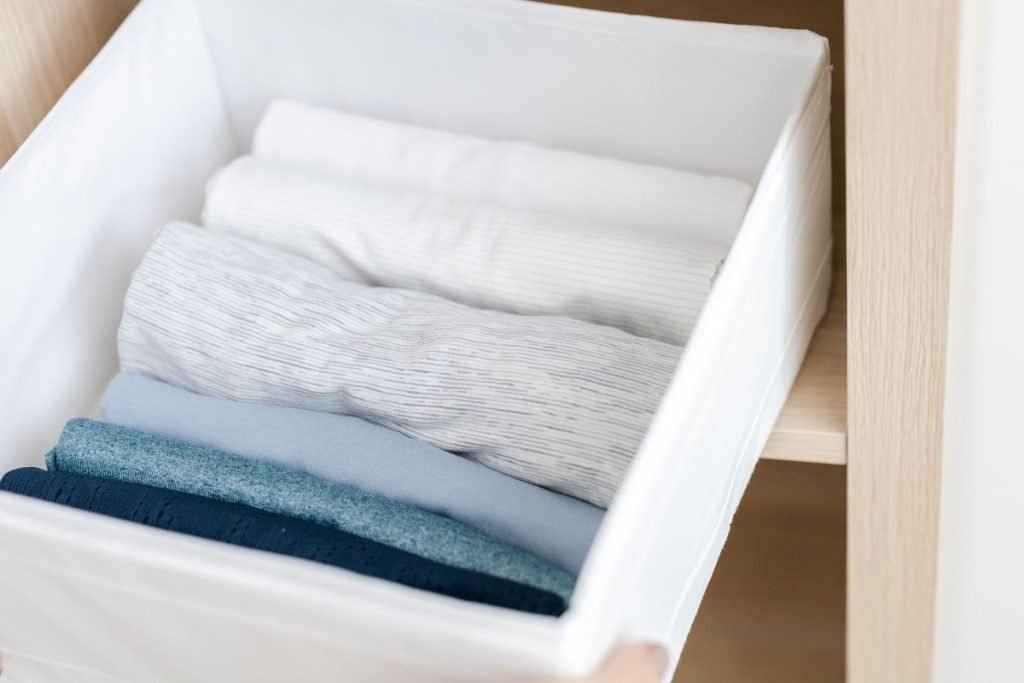
Recognising these hurdles isn’t about finding excuses; it’s about finding the right tools that actually work with your brain, rather than against it. If this resonates, you might like to read more about organising your home for and with ADHD.
From “I Should” to “I Deserve”: Changing Your Perspective
The most common phrase I hear from clients is “I should be able to do this.” But “should” is a word rooted in shame and external expectations. It keeps us stuck in a cycle of guilt because it focuses on our perceived failures. Whether it’s the weight of sentimental grief or the mental exhaustion of decision fatigue, your struggles are valid – but they don’t have to be permanent.
To break the cycle of overwhelm, we need to move toward “I deserve.” You deserve a home that doesn’t drain your energy. You deserve to find your keys without a 20-minute search. When we stop trying to “fix” ourselves and start “supporting” ourselves, the mountain begins to look like a series of small, manageable hills.

Sometimes, the barriers are simply too high to climb alone – and that’s perfectly okay. If you are looking for decluttering services in Singapore that truly understand the intersection of the heart and the brain, I am here to help. My In-Person Hands-On Assistance sessions provide a nurturing partnership to help you navigate the overwhelm safely.
What is the one item or area in your home that feels the most emotionally “heavy” for you right now? I’d love to hear your thoughts in the comments below.
Common Questions About Overcoming Clutter
How do I know where to start when everything feels urgent?
When everything feels like a priority, nothing is. In reality, it doesn’t matter where you start; the most important thing is simply to begin. Start with a tiny, contained area – like one single drawer or even just the top of a bedside table. Reducing the scope helps bypass task paralysis.
How do I deal with the guilt of throwing things away?
Guilt often stems from a fear of waste. Try reframing the “value” of the item: if it is taking a toll on your mental health and physical space, it is already “costing” you. Releasing it, whether through recycling or donation, is a gift to your future self.
What if I have a very strong attachment to almost everything?
It’s helpful to start with items that carry less emotional weight. Trust me, there are always things that are easier to let go of than others. Once you build your “decluttering muscle” with easy things to declutter, the sentimental items become much less daunting to process.

Leave a Reply