I have a love for books, I have always had. They help me escape reality and immerse myself in another world. Coming from a humble family, buying books was not often an option. And living in a small village, without a public library nearby to borrow books from, was not an option either. I remember scouting my neighbourhood as a teenager to borrow whatever books our neighbours had in their homes. One of my dreams was to own a bookshelf full of books that would be mine.
My books’ decluttering was the hardest category for me to declutter.
Coincidentally, or not, my first job was for a book publisher. I worked in the warehouse, overseeing the implementation of a Warehouse Management System, surrounded by thousands of books. Pure bliss! As I started making a decent living, I didn’t hold back buying books and eventually acquired a nice bookshelf. My dream had come true!
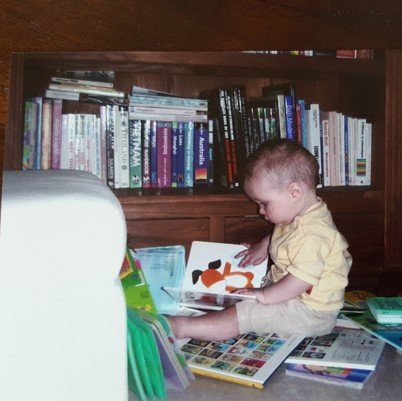
My books collection quickly grew, even faster after my son was born as I was indulging in buying children’s books. Unavoidably came a time when my bookshelf was full. Piling books on the floor or in a random cupboard was not an option for the organised freak that I am. Space and money were not a constraint to buying an additional bookshelf, but I decided against it. I knew I had to set some limits and let go of some of my books to make space for new ones.
This is when I unconsciously developed a decluttering approach that years later would become my staple approach as a professional organiser to help my clients let go.
Realising how difficult to face the idea of decluttering my books was, I decided to be gentle on myself and declutter progressively, starting with categories of books I felt less attached to and going through several iterations for those categories that were more difficult to purge.
This is how I proceeded with my books’ decluttering.
The travel guides
These were books I had no attachment to, and that’s where I started my books’ decluttering journey. Most of them were either out of date or about a country I had no intention of visiting again in the short term. All of them went in one go, except for a French guide on Singapore that I kept for visitors who didn’t speak English.
The recipe books
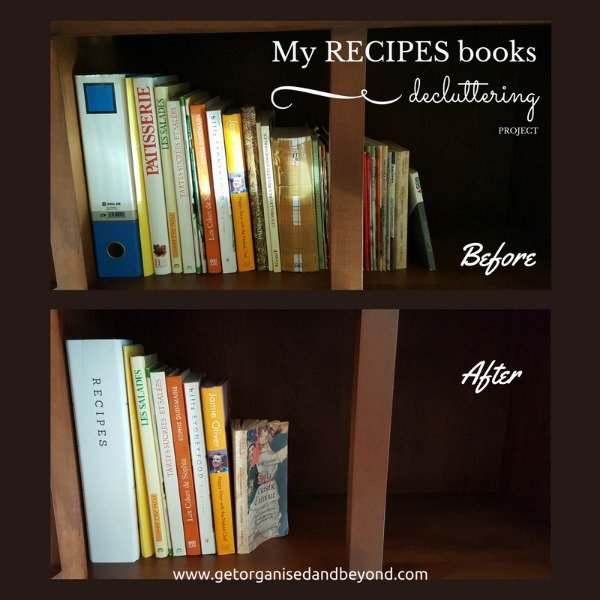
These were books I didn’t have much attachment to, so I was very practical about deciding which ones to keep and which ones to get rid of. I established a retention rule whereby I would keep a recipe book if I were cooking, or planning to cook, at least 5 recipes from that book. For less than 5 recipes, I would scan and print the recipe, file it into my recipe binder, and get rid of the book. By applying this rule, I reduced my recipe book collection from 35 to 9. 4 more books went out since then. All these books were given away to various friends who were interested in them.
The work reference books
These were books that embodied my past 20-year-long career in the supply chain field, before becoming a professional organiser. Letting go of them meant letting go of a successful past while I was trying my luck in an industry people had no awareness of in Singapore. It took me almost a year to let go of them, but eventually, the realisation that I had found my calling in my job as a professional organiser and was ready to embrace this new chapter in my work life helped me take the leap. All of them went in one go to a supply chain association I had been a member of for several years.
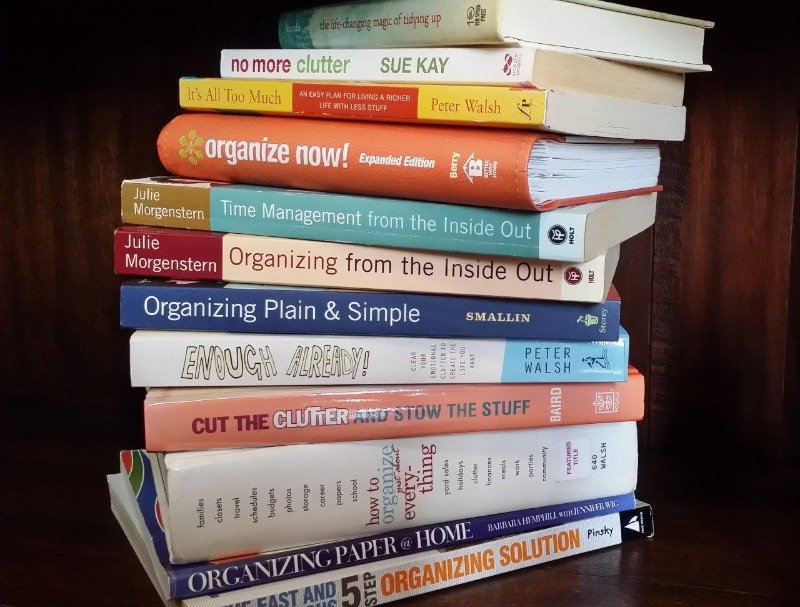
After the supply chain books came the professional organising books that I had started collecting especially in my early years as a professional organiser. But this time around, it was easier to decide to let go of the ones I knew I wouldn’t need again and keep only the ones I liked to refer to on a regular basis.
The novels
This was the category of books I was really dreading to let go of. And also the biggest as the novels accounted for about 80% of my books. It took me several iterations, spanned across several years, to purge them.
The first iteration consisted of letting go of the books that I hadn’t enjoyed or hadn’t been able to finish, or even start!
I realised I had been keeping them until then because of my ego, because I wanted to come across as a well-read and cultivated person. But things, including books, don’t define you, right?
So, at that point, I kept the books that I had really enjoyed, the ones that I thought I would want to read again (I can tell you now that I’ve only read two books more than once in my entire life…) and the ones somebody else would read, either my son when they were age-appropriate, or long-term visitors during their visits if they were short on books.
Almost 80% of the novels went over the course of a few years, every time leaving me more liberated and confident in my ability to trust my decisions and carry on the process.
Then came the time my son could read the books I had saved for him.
Unfortunately, reading those books that by then had been quite old and obviously inhabited by dust mites triggered allergic reactions in my son. After two visits to the doctor requiring a course of antibiotics, I realised that it was complete nonsense to compromise his health just for old books that we could buy or borrow if he really wanted to read them. Out they went.
The final stage of my books’ decluttering exercise happened 2.5 years ago when we downsized into a smaller apartment.
I took this opportunity to sell the bookshelf and got rid of the last few books I had kept, primarily coffee table books that once upon a time I had used for food fairs at my son’s school and that had outlived their purpose.
Less In, All Out. A new way of life.
Today, in between the internet where I find travel information and recipes, the well-stocked public libraries, and my Kindle, I hardly buy any physical books. Of course, you could argue that I just moved my book collection digitally through my Kindle. But for those who are book lovers, you know it’s not the same thing.
I get rid of the few physical books I buy or that are gifted to me after I’ve read them, except for a few selected reference books. I’m clear they have served their purpose for me, and I like the idea they can be enjoyed by someone else instead of being ignored on a bookshelf and collecting dust.
I still remember vividly the pleasure it gave one of my aunts to receive a pile of books I had re-gifted to her one Christmas, knowing I had read them and enjoyed them.
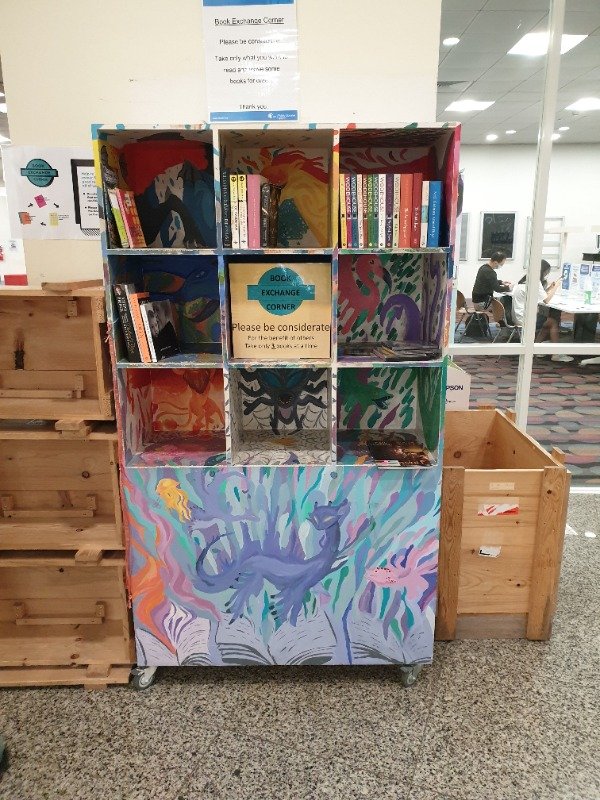
And when my family and friends are not interested in the books I have to offer, I leave them in the book exchange corner of one of the public libraries. The last time I did this, I ended up chatting with a lady who had grabbed one of the books I had just placed on the shelves. We talked about the book, and she left with it.
So not only my books’ decluttering approach has helped me free space in my home, but it has also made people around me happy while reducing our impact on the environment, in turn making me happy. What more to ask for?
A personal experience at the core of my work philosophy
To me, decluttering is certainly not a one-time affair but a journey to embark on at your own pace, building the confidence along the way to let go of a bit more at each iteration, and that might eventually take you further than you had ever imagined. Because if my goal had been to have a home almost free of books when I started my books decluttering journey, I’d never have started the process because I’d never have imagined it possible.
I hope my story will inspire you to have a good look at your book collection and ask yourself why you’re keeping it. Is it ego speaking? Do they hold sentimental value? Will you really read them again, and if you haven’t read them, will you ever do it?
If you are ready to take the plunge, here are a few questions to ask yourself when considering each of your books:
- Did I enjoy it?
- Would I read it again?
- Would I recommend it?
- Why haven’t I read it?
- Will I ever read it?
- Would someone in my home be interested in reading it?
- Would I buy it again if I were to lose it?
- Will I need it as reference materials?
- Does it hold sentimental value? Is it a family heirloom or autographed? Is there a special memory attached to it?
What can you do with books that you don’t want to keep?
Well, you can give them away, donate them to a charity, sell them, or even swap them.
Too much for you to declutter on your own? Reach out, you don’t have to face your clutter alone! In my hands-on coaching sessions, I create a safe place for you to share your challenges and express your vulnerability so you can overcome what holds you back and create an intentional space and life.

That was very interesting reading, thank you, Nathalie.
I love reading books but I must admit I’m a very slow reader. So my book collection is not overly huge. My husband, on the other hand, loves reading too and is a very fast reader. So he is the one who accumulates the books in our house! He has become quite good though at sorting some books out for charity whenever I ask him to do so – which is basically when the book case starts to overflow …. Having the available space as the limit really is a great approach that works very well for us.
I’m happy to read you enjoyed this blog post, Lucy. Yes, setting up limits in the form of a bookshelf, box, or container, is a great way to keep the clutter at bay.